Land Condition Symposium 2026: Event Reflection
Session 1
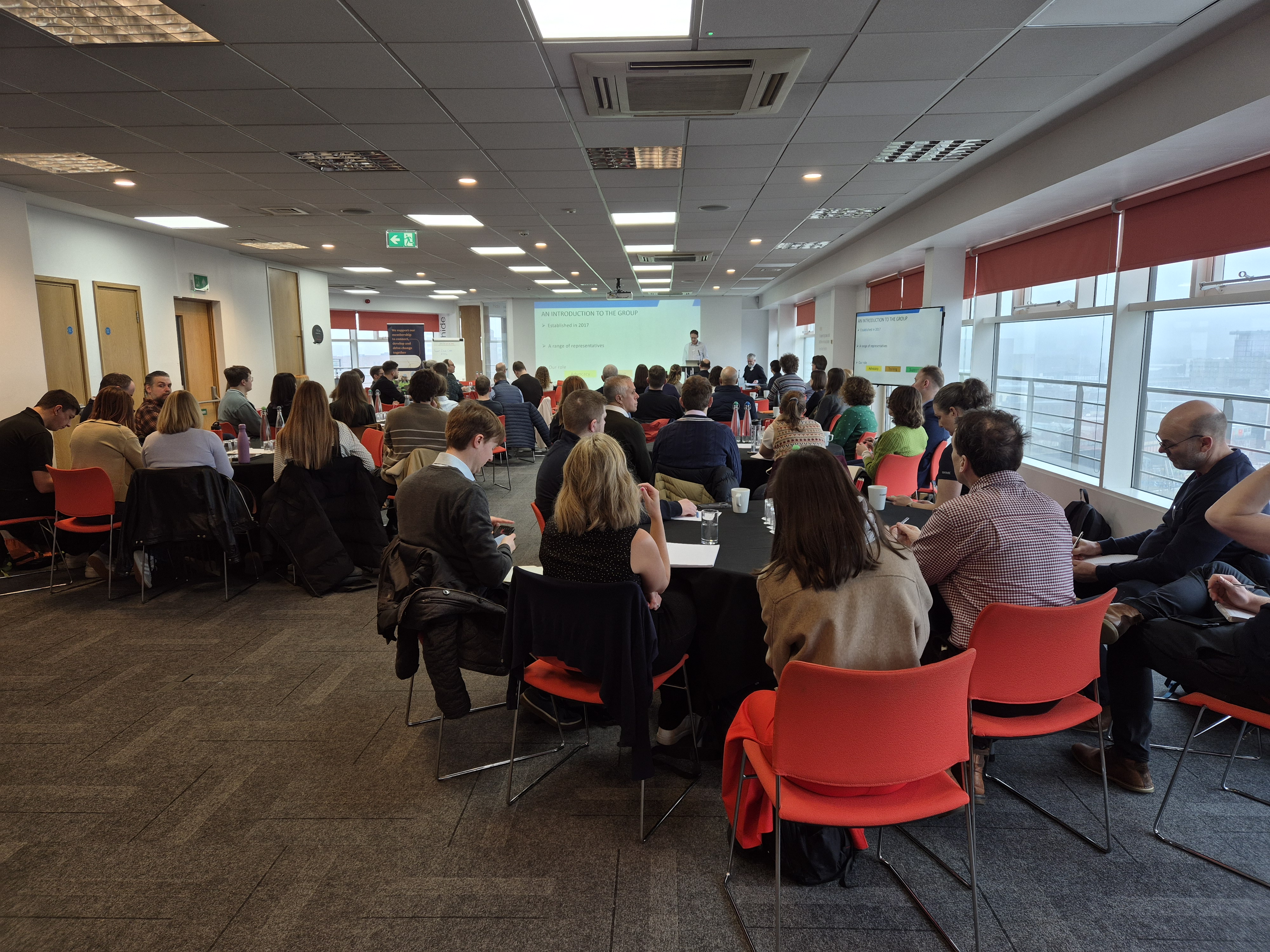
The morning presentations set the foundation for the day, providing context grounded in land condition expertise. The day was opened by Jonathan Atkinson, Technical Director at CL:AIRE, as well as a key member of the Land Condition Community, and a member of the symposium organising committee.
Presentations:
- Andrew Doerr, Chair of the Land Condition Community and Technical Director at WSP, began the session with a presentation that introduced the Land Condition Community and gave an overview of their many activities over the last year which included delivering a range of webinars, roundtables, consultation responses, report writing, and contributing to the Dialogue Between Disciplines conference. Delegates were encouraged to join the Community, if not already members, and to make suggestions for future activities.
- We also had an update on the National Contaminated Land Officers Group (NCLOG) from the Co-Chair of NCLOG and Lead Officer for Contaminated Land at Bradford City Council, Ann Barker. Ann opened by celebrating NLCOG's first year with the IES before giving an overview of the notable highlights of 2025/26 including; an increase in membership numbers, delivery of webinars, establishment of the NCLOG Regional Forum, and supporting the development of the Environment Agency's State of Contamination Land questionnaire. Ann outlined how the Regional Forum functions and their goals, gave updates on the NCLOG Framework Land Contamination Planning Conditions and the Land Contamination and Development Guide for Scotland, as well as highlighted planned future activities.
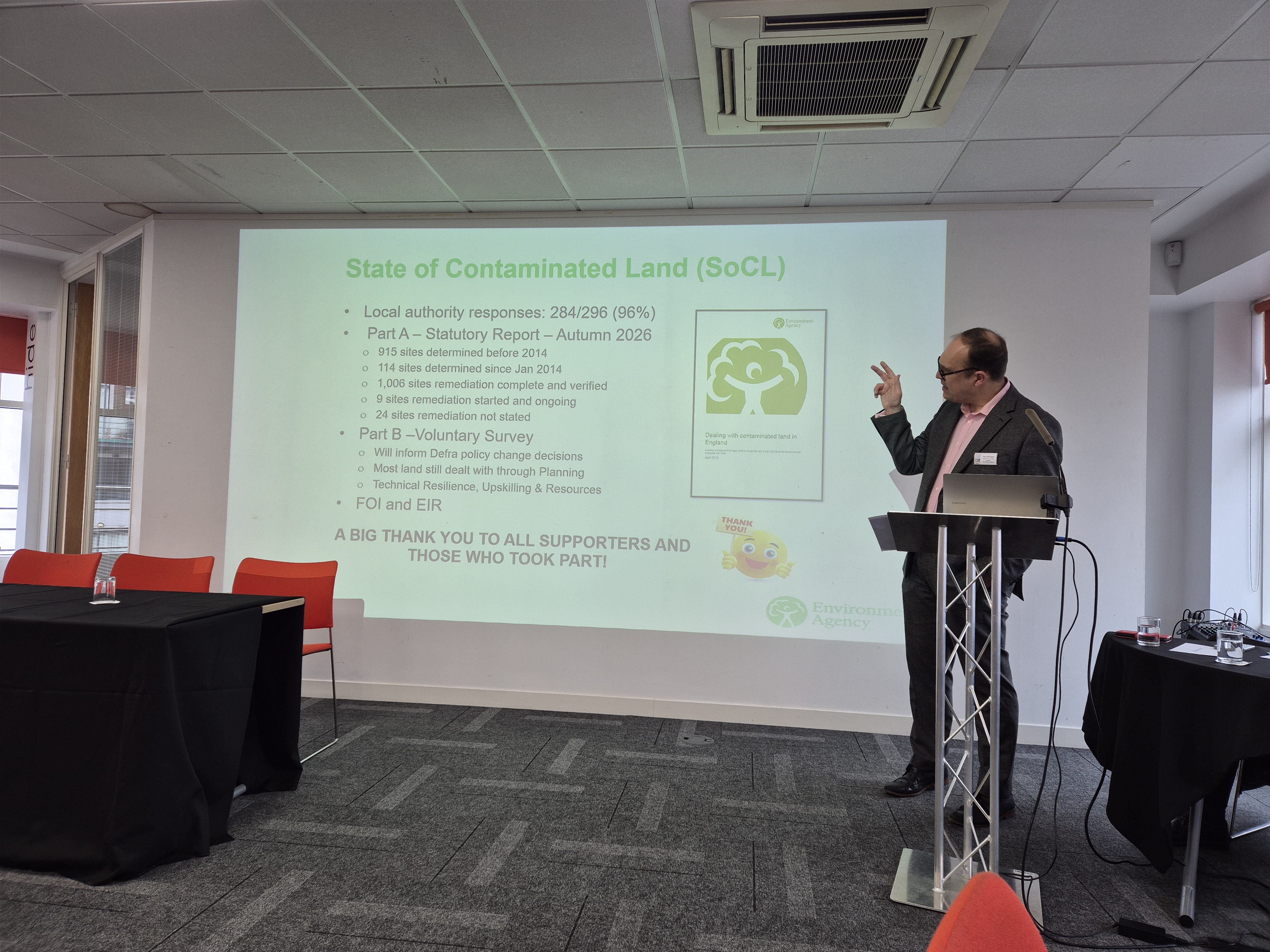
- Following on from this, Phil Whitaker, Land Contamination Manager at the Environment Agency, gave a brilliant presentation on the current issues facing land contamination. Phil gave an update on the work of his team across the land contamination sector which included an update on the State of Contaminated Land Report, the Land Remediation Pathfinder Scheme, PFAS Action Plan, and recent key publications. He also gave an overview of the work his team are involved with to unblock barriers to the remediation of land affected by contamination.
- Dan Maher, Senior Scientist at Geosyntec, presented a detailed analysis of the recently published DEFRA PFAS Plan, outlining the 'big talking points' which ranged from the lack of defined categorisation for PFAS concentrations and timescales for the achievement of restriction and reduction of PFAS. As well as highlighting some of the key strengths and weaknesses, Dan also gave consideration to what the plan means for the IES community and the general public in the years to come.
- To close the session, Darren Watson, Principal Environmental Analyst for the Office for Environmental Protection, gave a fascinating presentation analysing changes to the natural environment in England. Darren gave key insights into the monitoring of government environmental objectives within the Environmental Improvement Plan for England including an update on the OEP's assessment of progress across all 10 goal areas. He also gave a deep-dive into aspects of the Waste and Resources chapters to give a detailed understanding of the OEP’s focus on urban soils and brownfields.
This session concluded with a panel discussion and open Q&A, allowing the presenters to discuss questions together and build on shared knowledge.
Session 2
The second session was designed to bring in knowledge from external fields, demonstrating the interconnectivity of land contamination with a wide range of environmental issues. This session spanned various fields, discussing water pollution, sustainable drainage projects to combat land contamination, and the role of attenuation in construction sites for minimising environmental impacts.
Presentations:
- Jo Bradley, Director of Operations at Stormwater Shepherds, gave an insightful presentation on pollution from highway outfalls that outlined the prevalent need for government recognition, regulatory control, and pollution control measures. This presentation detailed the severity of highway pollutions, with in-depth analysis of the effects and wider impacts that needs addressing from the environmental community and regulatory bodies.
- Steve Wilson, Technical Director at The Environmental Protection Group, outlined the environmental benefits of introducing SuDS into development and construction projects to reduce flood risks, treat pollution, and encourage biodiversity, pre-emptively addressing pollutants to prevent further land contamination. This presentation went into depth correcting common myths about implementing SuDS into projects, providing detailed case studies of Wilson's own work, and arguing for more attention for the maintenance needed for SuDS.
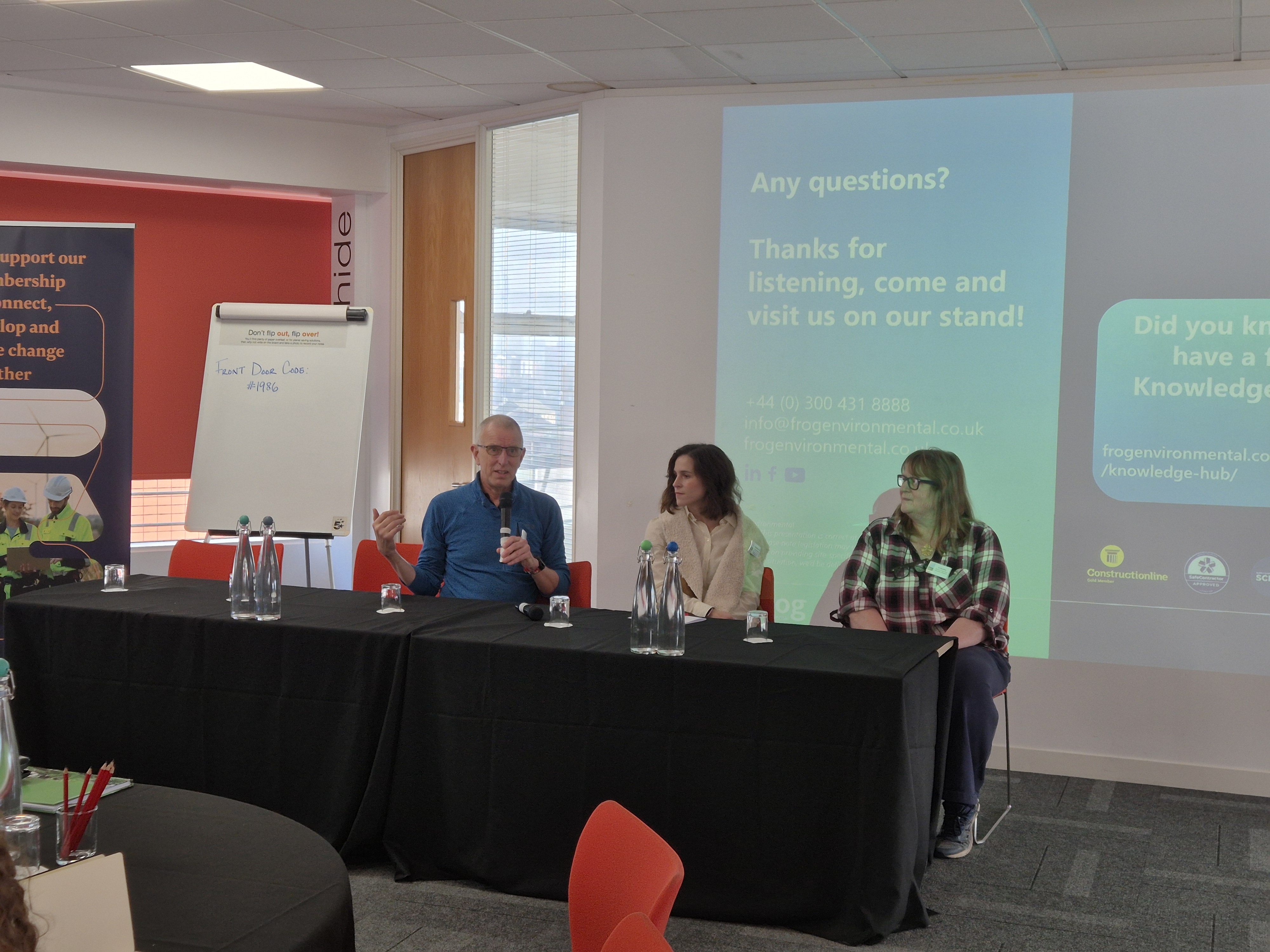
- Natalia Perez del Postigo Prieto, Senior Technical Specialist & Digital Innovation Lead at Frog Environmental, explored the effects of sediment pollution from exposed soils on construction sites along with detail on preventative measures to protect watercourses, groundwater, and sensitive habitats. This presentation analysed how sediment attenuation can be effectively embedded within Surface Water Management Strategies, drawing on examples from residential and commercial developments and infrastructure projects across UK, and provided innovative technical solutions.
This session concluded with a panel discussion and open Q&A, where our speakers demonstrated the value of collaboration through idea sharing and debating different perspectives.
Session 3
The third session kicked off the afternoon by opening with two interactive and participatory sessions.
Our Interactive sessions:
- Liz Hart, Land Quality Specialist at Hart Environmental Ltd, opened the afternoon with an energetic practical demonstration on the significant waste of soil on construction sites due to mismanagement of resources, communication failures between sites, and the consequential loss of rich soil to landfills and waste facilities. Liz demonstrated that soil tracking is a core element of applying the DoWCoP and delivering an effective Materials Management Plan, advocating for soils to be treated as a valuable resource rather than as a waste.
- Ethny Childs, Head of Communities & Partnerships at the IES, delivered a discussion-prompting session, in collaboration with Rebecca Hearn, Environmental Consultant at Murray Environmental Ltd who was sadly unable to join on the day, to explore the perception of environmental issues amongst young children. The session investigated young people’s awareness of land condition issues, providing insight into environmental education, and prompting consideration of how to best communicate the breadth, variety, and importance of land condition careers to younger generations.
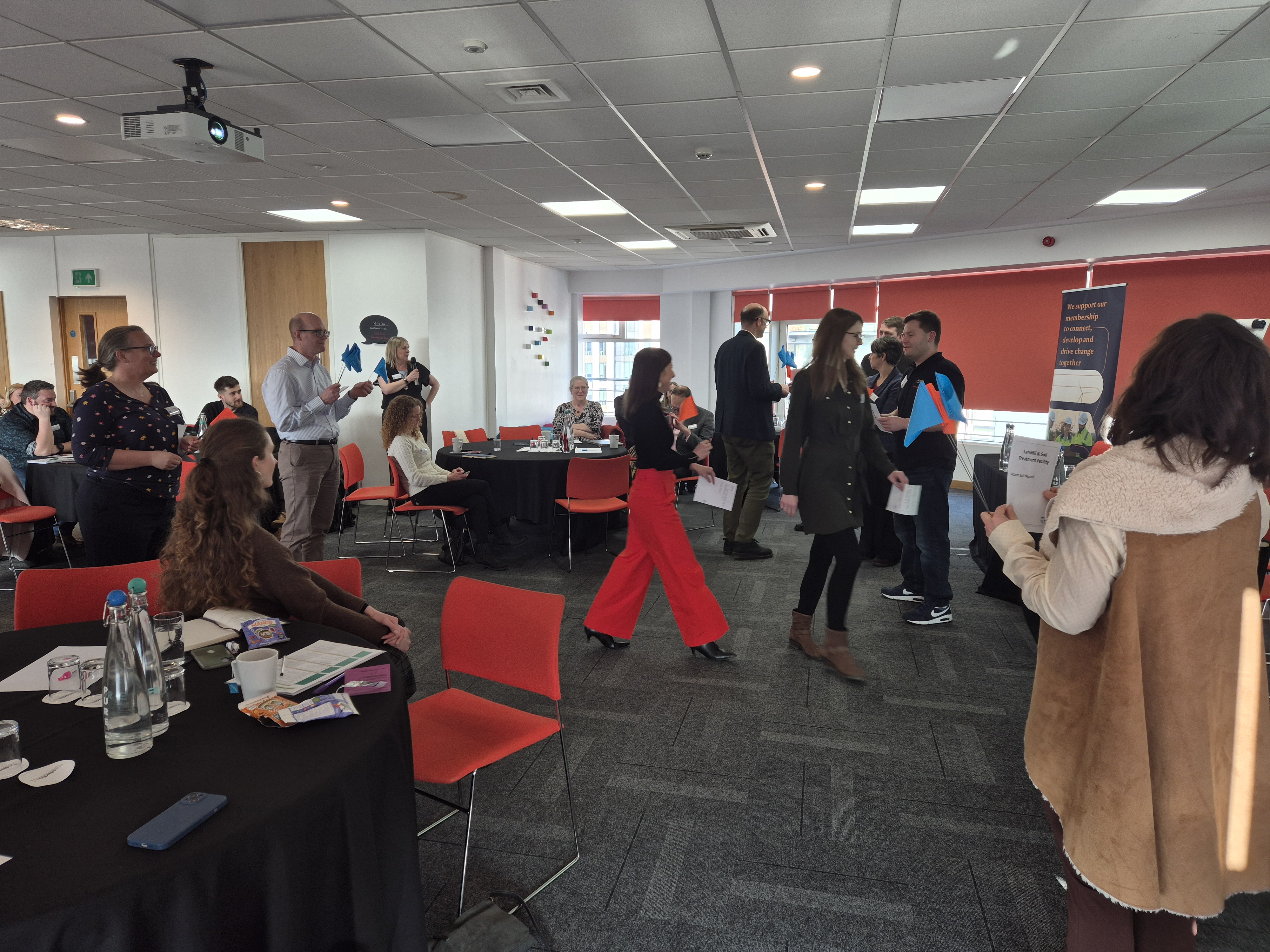
This was followed by scientific driven presentations focusing on pollutants, bringing together perspectives from air quality to water pollution to discuss the implications of land contamination on wider environmental issues.
Presentations:
- Sarah Horrocks, Head of Air Quality and Emissions at AtkinsRealis, gave a detailed presentation on the monitoring and management of air quality on brownfield remediation sites, focusing on the new IAQM Good Practice Guidance. This presentation highlighted the benefits of a more integrated approach between air quality, land contamination, planning, and engineering disciplines, which is essential for successful brownfield redevelopment.
- Dr Ben Stride, Environmental Consultant at Ramboll, presented a fascinating and in-depth overview of current research on microplastic and PFAS interactions in aquatic environments, evaluating their combined toxicity, pollution from coastal landfills and contaminated land erosion, and potential appraisal options and treatment technologies.
This session concluded with an open Q&A, where presenters gave clarifying answers and detailed explanations of their areas of specialisms to attendees, providing the opportunity to engage directly with experts in their fields.
Session 4
The final session of the conference examined the importance of collaboration when working on land condition projects. This ranged from the benefits of archaeological surveys on potential development sites, the development of new data-sharing plans, and the range of technological developments available for landscape surveying.
Presentations:
- Beki Jones, Associate Director - Archaeology & Heritage at E3P, gave an insightful presentation on the crucial role of archaeology in land development and construction projects, promoting the need for archaeological assessment on potential sites to have a greater understanding of the historical use of the site, including potential materials and chemicals underneath the soil, in order to minimise risks and delays once work has begun.
- Adam Cadman, Geo-environmental Discipline Director of A-squared Studio, presented an alternative data-sharing plan which aims to prevent the flattening of data into pdfs when sharing across institutions, networks, clients, etc. in order to maximising efficiency and reduce data transferring admin. This presentation further explored opportunities for more structured spatial and digital sharing of interpretative geo-environmental data, and the potential role of regulators through planning and GIS systems.
- Sam Long, Account Executive at Propeller Aero, detailed the new technological developments in 3D model mapping, drone surveying software for landscapes, and use of data maps to track surface runoff, potential flood risks, and watershed analysis to improve the efficiency and monitoring of construction and development sites. Sam further detailed how Propeller Aero helps teams capture, process, and analyse site data to improve visibility, accuracy, and decision-making across the project lifecycle.
This session concluded with an open Q&A, during which speakers handled a range of questions on their specialisms with detailed information and clarity.
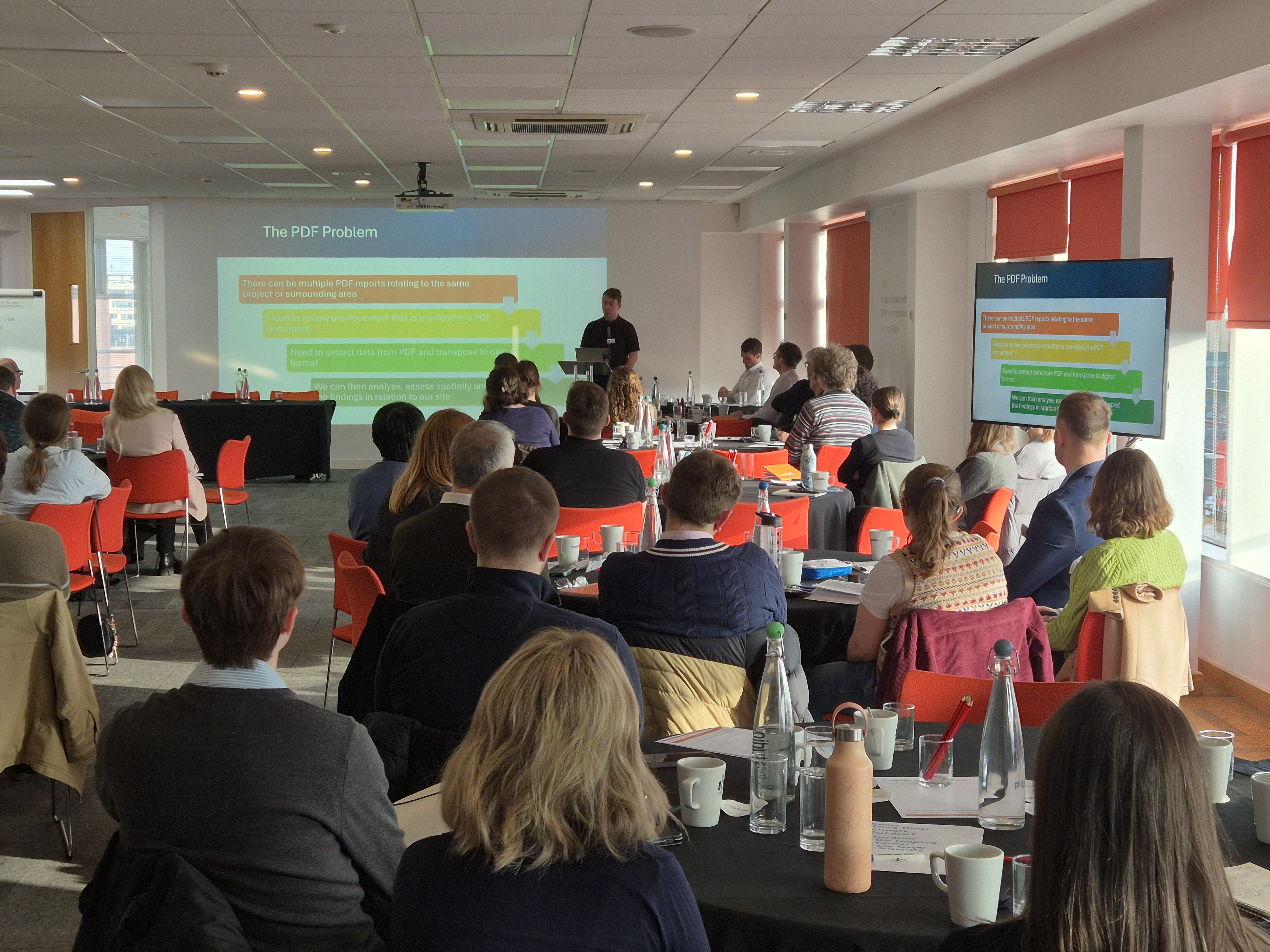
Overall, the 2026 Land Condition Symposium hosted presentations from a range of diverse disciplines, bringing together insightful perspectives for collaboration on complex issues currently facing land condition. Combining detailed presentations, interactive sessions, open panel discussions, and networking opportunities, the symposium was a valuable mix of knowledge sharing and community collaboration.
We would like to extend our thanks to all of the speakers, chairs, sponsors, exhibitors, and delegates for making it such a great day. We hope to see some of you there next year!
Header image credit: © Philip J Openshaw - Adobe Stock