
National Contaminated Land Officers Group
The voice for Contaminated Land Officers in the UK
Supporting Contaminated Land Officers
The National Contaminated Land Officers Group (NCLOG) is a member-led, specialist interest group and is part of the Environmental Policy Implementation Community (EPIC). NCLOG members are Contaminated Land Officers (CLOs) working in local authorities.
The community works together to act as the national voice for CLOs in the UK and to promote high-quality and consistent regulation and management of land contamination across the sector. We provide a home for CLOs to share ideas and knowledge, support members through developing guidance and resources and provide peer support to individual CLOs, who may be the sole individuals dealing with land contamination in their Council.
NCLOG has over 260 members across the UK and has strong links with regional Contaminated Land Officer Groups (CLOGs) through its Regions Forum.

Joining NCLOG
Membership of NCLOG is exclusively open to local authority professionals working in land contamination, on an individual rather than an employer basis.
Individuals wishing to join NCLOG must first join the Environmental Policy Implementation Community (EPIC). EPIC membership is open to all local authority environmental professionals, regardless of whether they are IES members.
Those working in Land Contamination will also be able to join NCLOG.
Upcoming events



News and insights
Guidance and resources

NCLOG FAQs
NCLOG membership is only open to UK local authority employees whose work includes significant contaminated land elements. We use the term Contaminated Land Officers (CLOs) to describe these employees, however not all will have the CLO job title.
To become an NCLOG member, you must also become a member of the Environmental Policy Implementation Community (EPIC) at the IES. This is because NCLOG is part of EPIC. All IES members and environmental professionals working in local authorities can join EPIC (free of charge). Membership is for individuals only.
NCLOG membership includes:
- Monthly NCLOG newsletter, providing updates on the latest NCLOG activities and opportunities, as well as wider contaminated land news
- Acess to member-only webinars and workshops
- Access to the annual NCLOG AGM & Conference (held in May)
- Guidance and support with key econtaminated land issues
- Opportunities to get involved in working groups, and feed-in to NCLOG consultation responses and policy positions
NCLOG is governed by the NCLOG Committee, which makes decisions and sets the direction of the community. View the Committee Terms of Reference.
Working groups lead on specific issues and workstreams. NCLOG also hosts a Regions Forum, which brings together representatives from Regional Contaminated Land Officers Groups across the UK.
The concept of a National Contaminated Land Officers Group was developed in 2018 by Anita Metelko, Ann Barker, Julia Reynolds and Sarah Greenhough, CLOs from the West Midlands, Yorkshire and Lincolnshire. A survey of CLOs confirmed that there was a large appetite across the UK to form a national body.
NCLOG was launched in 2019 at the Molineux Stadium in Wolverhampton. The Interim Steering Committee established the initial governance of NCLOG, setting up a membership application system and contacting CLOGs across the UK. The work of NCLOG began in earnest at this time with regular events and consultation responses. NCLOG activities were restricted during the Covid-19 pandemic, but by 2021 the organisation was developing apace and had become the ‘go to’ organisation for those wishing to engage with CLOs; running training events and webinars, presenting at conferences and publishing guidance. NCLOG has continued to maintain close links with CLOGs, as well as working closely with government and other key stakeholders, and is represented on the National Brownfield Forum.
NCLOG joined the IES family in January 2025 to continue to develop its operations, reach and influence, and support collaboration across environmental professional communities.
NCLOG Commitee





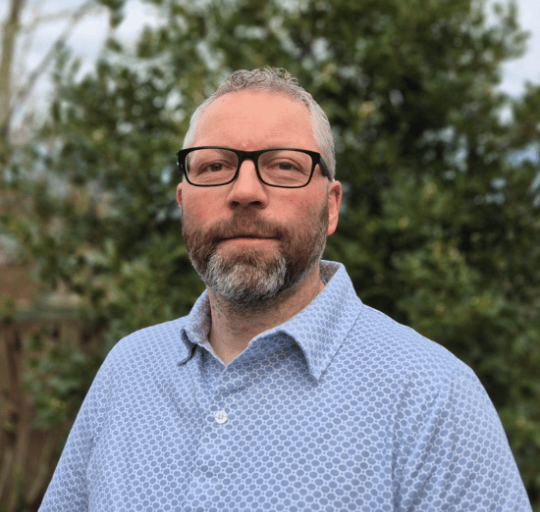





Community Coordinator

Other Communities






The Institution of Environmental Sciences (IES) is a charitable organisation; a global professional membership body for environmental scientists.