
Two million toads and counting: Citizen science, freshwater policy, and the future of one of Britain’s most familiar amphibians
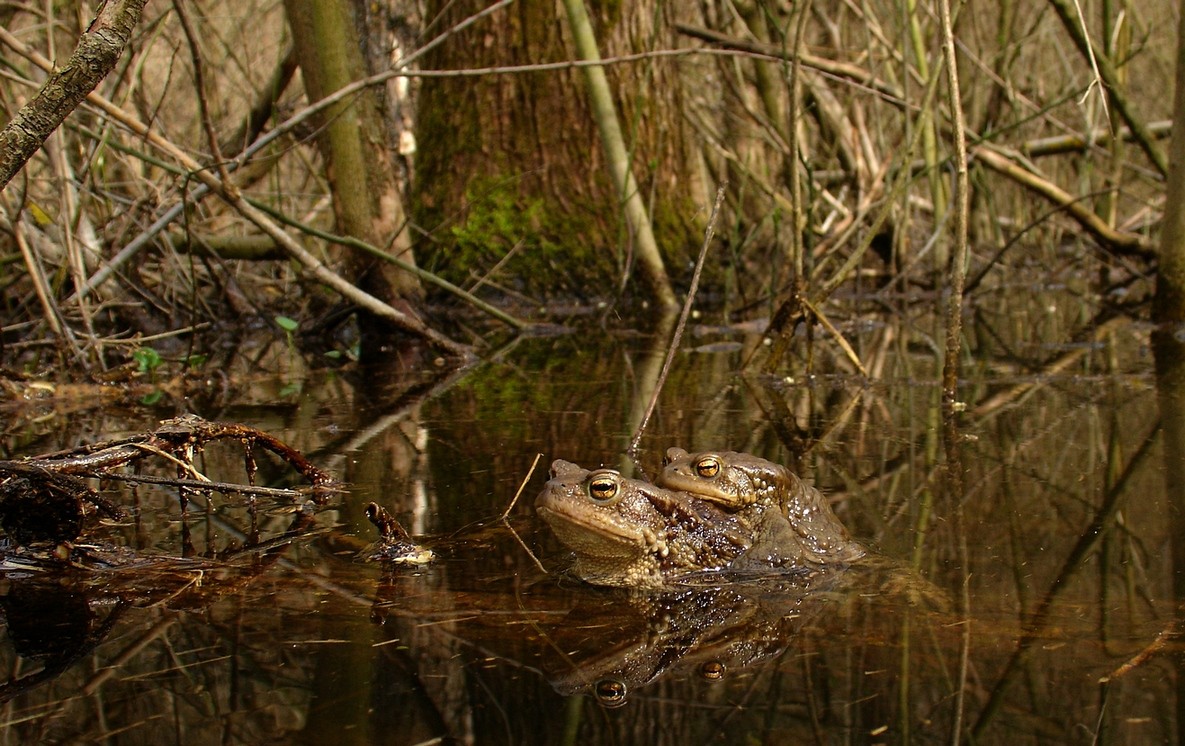
Each spring, on warm and rainy evenings across Britain, a migration unfolds. From woodland edges, hedgerows, gardens, and grasslands, thousands of common toads (Bufo bufo) begin a determined journey to the breeding ponds they have likely visited for many years. Britain has one of the highest road density networks in Europe – so for many populations, that journey includes crossing busy roads.
For decades, volunteers have been helping them. Through the long-running Toads on Roads citizen science programme coordinated by amphibian and reptile conservation charity Froglife, volunteer ‘Toad Patrollers’ have helped amphibians cross roads safely during their breeding migrations. Since Froglife records began in 1985, these volunteers have assisted more than two million toads across roads in Great Britain.
The scale of this effort highlights the power of citizen science to not only act as a significant welfare intervention but also to deliver direct conservation outcomes, slowing declines and in some cases stopping local populations going extinct. However, despite decades of local action, the data collected by these citizen scientists shows that nationally the common toad – one of Britain’s most widespread amphibians – has experienced a significant population decline. Recent analysis of four decades of citizen science data indicates that British common toad populations have fallen by approximately 41% since the 1980s. These declines are mirrored in Switzerland where equivalent projects are taking place, suggesting that common toads are experiencing declines across their range.
A year in the life of the common toad
The common toad is one of the UK’s most recognisable amphibians. Historically widespread across Britain, it occupies a broad range of landscapes. Outside the breeding season, toads spend much of their time in terrestrial habitats. After breeding, they move into meadows and grasslands where they spend the summer feeding on invertebrates, before travelling into woodlands and hedgerows where they overwinter. Here, they shelter in leaf litter and under dead wood, in a state called brumation – a kind of dormancy where metabolism dramatically slows.
In early spring, adult toads migrate to breeding ponds. These movements typically occur during mild, wet nights when temperatures remain consistently above 5°C. During favourable conditions, hundreds or even thousands of individuals may move across the landscape simultaneously.
Unlike many other amphibians, common toads often exhibit strong site fidelity, returning to the same breeding pond year after year. They favour larger, deeper water bodies (large ponds and lakes) compared to other amphibians such as common frogs, because their breeding cycle is more fixed. Frog tadpoles, on the other hand, can speed up their development if the water bodies they are in warm up and start drying out. While toad behaviour may be ecologically advantageous, allowing populations to exploit stable breeding sites, it also creates vulnerability where popular migration routes intersect with roads. This is exacerbated by their defence mechanism – hunker down and freeze – which, while effective when avoiding detection by a predator in leaf litter or long grass where they are well camouflaged, is lethal in the face of oncoming traffic.
Common toads remain widely distributed and have an explosive breeding cycle – they lay large numbers of eggs, but only a small percentage survive to adulthood to reproduce themselves. This makes their population naturally very volatile, with the potential to expand and shrink significantly from one year to the next, making true trends difficult to detect without long-term monitoring. The data collected through volunteer patrols has therefore been instrumental in revealing the scale of change.
Road mortality and the role of citizen science
The term ‘Toad Crossing’ has been coined for the point at which a toad’s historic migration route now bisects a road. When large numbers attempt to cross at the same time, mortality rates can be high. This is where Toad Patrollers play a crucial role.
Volunteers, dressed in high vis and non-powdered vinyl gloves, and armed with powerful torches and buckets, monitor known migration sites and carefully move amphibians across roads, typically placing them on the verge in the direction they were travelling.
The impact is significant. In 2025 alone, a record breaking 280 volunteer patrols assisted 156,227 toads during the spring migration season, helping prevent local populations from collapsing due to road mortality. In addition, the patrols generate large volumes of ecological data, including migration timing, species presence, relative population size, and long-term site activity. Such information provides valuable insight into amphibian population trends and environmental change. Citizen science therefore contributes in two important ways: it directly reduces mortality during migration, while simultaneously building an evidence base for conservation and research.
Although the primary goal of toad patrolling is conservation, participants frequently report additional social benefits including:
Increased time outdoors (particularly at a time of year and in conditions when most people would be inside)
Opportunities to meet neighbours and build community connections
Improved wellbeing through contact with nature
A sense of agency in addressing environmental challenges
These outcomes are consistent with growing evidence that citizen science can deliver both ecological and social value. At a time when many environmental issues can feel remote or overwhelming, programmes such as Toads on Roads offer people a direct way to contribute to conservation in their own communities.
Data that informs policy and planning
The datasets generated through the Toads on Roads programme are used internally by Froglife and shared externally with conservation partners and researchers. They are also made publicly available through the National Biodiversity Network (NBN) Atlas. These data support a wide range of applications, including ecological research, biodiversity monitoring, and planning and development decisions.
To date, the 3,166 occurrence records available from the Toads on Roads data have been downloaded almost 1,200 times. Such open-access biodiversity data play an increasingly important role in environmental governance. Long-term citizen science datasets are often among the few sources capable of revealing population trends over decades. In the case of the common toad, these datasets were central to identifying the species’s long-term decline and its subsequent listing on the IUCN Red List for Great Britain as Near Threatened in 2021.
Gaps in protection and opportunities for action
Despite a record number of toad patrols helping a record number of toads at crossings last year, patrols still recorded 17,251 toads killed at manned toad crossings. Sadly, busy roads and wide migration routes can mean that not all toads can be rescued. Many patrols are therefore keen to increase their volunteer numbers to share the load and reduce the road mortality at their crossings.
In addition, analysis of Froglife’s data shows that despite the growth of volunteer patrols, many registered toad crossing sites currently have no active patrols. These gaps are particularly common in Scotland and parts of the Midlands and North-East of England, signalling a clear opportunity to immediately reduce mortality and support local populations through having crossings actively patrolled. A handful of toad patrols have persuaded local councils to instate road closures, then either stopping regular patrols or continuing to help toads avoid residents’ cars and barriers to their migration. Such barriers can include long walls alongside residential properties and buildings next to the road.
At Charlcombe Lane in Bath, the road casualty rate was sixty-two per cent in 2002. In 2025 it was just three per cent, with the second highest number of live amphibians recorded since the road closure started in 2003, and a great crested newt seen for the first time in the patrol’s history.
While volunteer patrols remain essential, longer-term conservation solutions will also require infrastructure and landscape-scale planning. Many toad patrollers also advocate for their local toad population by encouraging and supporting local councils, landowners and decision makers to do this work.
Potential measures include:
Amphibian tunnels beneath roads
Drop kerbs
Wildlife-friendly drainage systems including amphibian escape ladders
Habitat restoration along migration routes
Protection of breeding ponds
However, identifying where such interventions are needed relies heavily on both population data generated by citizen science, and evidence for the most effective interventions and associated installation methods.
Beyond roads: freshwater quality and habitat loss
While road mortality is a highly visible and quantifiable threat, it is not the only factor affecting common toad populations. More broadly, amphibians across Europe are experiencing pressures linked to habitat loss, land-use change, and freshwater pollution. In Britain, the loss and degradation of freshwater habitats has reduced the availability of suitable breeding ponds. Agricultural intensification, urban development, and drainage have all contributed to the decline of these habitats.
Pollution represents an additional challenge. Runoff from agriculture and sewage discharges can degrade aquatic ecosystems, affecting amphibian survival and reproductive success. Because amphibians rely on both terrestrial and aquatic environments throughout their life cycles, they are particularly sensitive indicators of ecosystem health. Declines in amphibian populations often signal wider environmental pressures affecting the local area.
This connection between amphibian conservation and Government policy has become an increasing focus for Froglife in recent years. Many conservationists were disappointed by last year’s Planning and Infrastructure Bill, which didn’t go far enough to protect wildlife in the UK, and conservationists are keen avoid further disappointment around emerging water policy.
Why water reform matters for amphibians
The UK Government’s forthcoming Water Reform Bill presents an important opportunity to address the environmental pressures affecting freshwater ecosystems.
A coalition of environmental organisations coordinated by Wildlife and Countryside Link – including Froglife – has launched the Clean Water Now campaign to advocate for stronger legislation.
The campaign identifies three key priorities for reform:
Stop the polluters − clamp down on sewage, restrict intensive agriculture and ban toxic chemical pollution
Fix the broken system − stop water companies putting profit before people and nature, with a tough new regulator focused on nature and local communities involved
Restore nature − creating new natural habitats along rivers and coastlines, building natural resilience to climate change and bringing wildlife to communities around the country
Members of the public are being encouraged to take action by telling their MP that they expect laws for water that address these priorities and deliver clean water. Amphibians like the common toad depend on clean, well-connected aquatic habitats. Without improvements in water quality and habitat restoration, local mitigation efforts such as toad patrols can only achieve limited long-term success.
The story of two million toads safely crossing roads thanks to volunteers demonstrates what community action can achieve with relatively simple resources. But it also reminds us that local conservation efforts must be supported by wider environmental policy if they are to succeed in the long term. For environmental scientists, policymakers, and members of the public alike, the lesson is clear: safeguarding biodiversity requires both collective action and systemic change.
Sometimes that begins with something as simple as a volunteer, a torch, and a wet spring evening.
Jenny Tse-Leon is Head of Conservation and Impact at Froglife. She is responsible for Froglife's reserves, citizen science projects, and project impact evaluation. She also represents Froglife on policy matters at a Westminster level and leads the charity's communications. She has expertise in engaging people – especially those from disadvantaged backgrounds – with nature conservation.
Header image: © Chris Pook