Santa Marta & the race for climate solutions
Global climate negotiations are on a tightrope between two tipping points.
On one side, there’s a real prospect of tipping towards faster action to address climate change. International science and global citizen movements are making stronger and stronger calls for ramping up coordinated solutions. The call to move from ambition to action is making a difference. On the other side of the tightrope, a vocal few are seeking to reverse the consensus and weaken global action on climate change.
For many years, we have imagined that which side of the tightrope we fall towards will depend on the outcomes of negotiations at major summits like COP30. Now, it is increasingly clear that the days between those summits matter as much as the negotiations themselves.
Seizing the chance to keep international ambition on the agenda, Colombia hosted a conference in Santa Marta at the end of April, uniting a coalition of countries willing to take more action to support the transition away from fossil fuels.
Joseph Lewis is Head of Policy at the Institution of Environmental Sciences, working to promote the use of the environmental sciences in decision making. Joseph leads the delivery of the IES Policy Programme, standing up for the voice of science, scientists, and the natural world in policy.
Joseph has more than ten years of experience in public policy, including in Parliament and the charity sector. He was recognised on the ENDS Power List 2026 as "a prominent advocate for ensuring environmental science is reflected in public policy".
What was the Santa Marta Conference?
The First Conference on Transitioning Away from Fossil Fuels, held in Santa Marta, Colombia, was the first in a new series of international conferences intended to accelerate action on the transition away from fossil fuels. The focus was on delivery, aimed at countries already committed to taking action as ‘first-movers’.
Nearly 60 countries took part in the conference, along with subnational governments and other key stakeholders, aiming to establish a tangible process to enable action and planning to support the transition in practice. From the beginning, Santa Marta embodied two clear principles: starting with science and focusing on clear, evidence-led delivery.
Before the main event, Colombia hosted a science pre-conference event with roughly 400 academics. The experts covered 11 critical discussion topics in focused groups, starting from a science-led perspective to lay the groundwork for the rest of the summit. The pre-conference was also used as a stage to launch a draft roadmap for Colombia’s transition away from fossil fuels, which could bring Colombia’s emissions from energy use to 90% below 2015 levels by 2050.
The events in Santa Marta are important. They mark the beginning of the next stage for climate action. While global negotiations still have a role to play in defending the consensus and incrementally ratcheting up ambitions, the most important progress over the next decade may come from diffuse action in lots of different places.
The Santa Marta model shows that approach can work. It demonstrates that a group of willing countries can be leaders for change, even in the absence of the world’s most powerful states.
What were the main outcomes of the conference?
As a first conference, much of the agenda at Santa Marta was focused on setting out a path for the future. Three workstreams were laid out, covering:
- National and regional roadmaps: Working to support the development of national and regional roadmaps away from fossil fuels. While ‘transitioning away’ mirrors the language of COP28 in not explicitly committing to a ‘phase out’, the consensus behind the workstream is clear: to make a meaningful difference to fossil fuel emissions at a national and regional level.
- Finance reform: Aiming to change the financial system and better facilitate the transition, with a view to the influence of fossil fuel subsidies and other pressures that inhere against the transition in practice.
- Trade reform: Advancing progress towards a system of trade that is free of fossil fuels and addressing the intensity of fossil fuels in trade decisions. The workstream will be supported by the OECD, potentially giving it the strength to make an impact on how decisions about trade are being made.
Ahead of the conference, a synthesis report was circulated to leaders with 12 “Action Insights” to set the scene for discussions:
- Develop holistic government plans to transition away from fossil fuels and dismantle legal, financial, and political barriers resulting from fossil fuel lock-in and entrenchment
- Proactively protect livelihoods and workers through early retraining, skills development, and community and regional redevelopment
- Communicate fair, transparent, and evidence-based policies
- Appeal to human values and wellbeing to convey the need to transition
- Take immediate measures to prevent future emissions
- Implement carbon pricing with international harmonisation and phase out fossil fuel subsidies
- Establish enabling standards and monitoring requirements for fossil fuel transition targets and timetables
- Implement harmonised fossil fuel supply levies to incentivise demand shifts and fund just transitions
- Leverage central banks’ financial and price stability mandates to reduce the financing costs of clean energy, electrification, and enabling infrastructure
- Strengthen international cooperation on transitioning away from fossil fuels within and outside of the UNFCCC
- Integrate all forms of knowledge and development imperatives in planning for just transitions
- Realign international legal frameworks to support just transitions away from fossil fuels
Read the full Santa Marta Synthesis Report (pdf) for more information.
Science in the spotlight
The conference also established a new Science Panel for the Global Energy Transition (SPGET), with four working groups, focusing on transition pathways, technological solutions, policy design and evaluation, and financial instruments and governments.
Compared to the Intergovernmental Panel on Climate Change (IPCC), the goal is for SPGET to represent a more dynamic approach to providing policy-relevant climate science. The intention is that annual reporting will allow for faster and more reactive commentary compared to the IPCC’s multi-year reporting cycle; insights will be made more relevant to the national level; and the independence of the panel will allow it to cut past politics in a way that the IPCC cannot.
Both panels remain valuable. The IPCC’s slower reporting cycle is vital for bringing together robust synthesis reports, which have been a crucial tool for influencing governments. Similarly, while the IPCC’s links to national governments may act as a brake on action, it also ties those governments to the consensus for science-informed action on climate change.
Reflecting on the format of the conference, attendees described the approach as “refreshing”. Santa Marta was both less formal than typical negotiations and much better at cutting past the politics, as the countries taking part were already committed to making things happen. While positive, this comes at a cost, because it meant that many of the world’s largest carbon emitting countries weren’t invited to be in the room.
A two-speed transition wouldn’t be a bad thing if it allows more ambitious states to accelerate climate action, but it cannot become an excuse for others to press down on the brakes. Santa Marta is a critical first step, as long as the outcomes from the conference are picked up by the countries where ambitious action is most urgently needed.
What are the experts saying?
“The global transition away from fossil fuels has long been a sticking point in international climate negotiations. Under existing UNFCCC mechanisms, there has been limited space to focus on the practical implementation of transitioning away from fossil fuels, as consensus-based processes often slow down urgent action. While many of the required technologies and policy approaches already exist, significant barriers around political will, coordination, and financing remain.
In this context, the first “Transitioning away from Fossil Fuels” conference provides an essential space for frontrunner countries to exchange on the practical implementation of fossil fuel phase-out commitments. By bringing together economies at different stages of development and recognising the importance of a just transition, human rights, and the interlinked crises of pollution and biodiversity loss, it has the potential to act as a catalyst not only for those involved but also for broader global action. A discussion space focused on implementation is key to addressing these aspects, as well as enabling conditions such as access to finance.
The participation of the European Union, the United Kingdom, and a number of EU Member States in the conference is an indicator of a shift from commitments to action in a rather uncertain time for global climate action and will hopefully set the tone for outcome-focused, science-driven, and socially responsible fossil fuel phase-out.
However, its value will ultimately depend on whether it can move beyond dialogue and generate concrete, actionable outcomes. The absence of universal consensus should not delay progress, and those prepared to act must be enabled to do so, while ensuring the transition remains just and inclusive.”
- Daryna Kulaga and Luciana Miu, Logika Group's Environmental Policy and Economics Team
Continuing the journey: what comes next?
Santa Marta was the first Conference on Transitioning Away from Fossil Fuels. A second conference will be held in the Pacific island nation of Tuvalu next year, co-hosted by Ireland. This is the start of a process that may lead to a broadening coalition of states eager for action over the last years of this critical decade.
In the meantime, findings from Santa Marta will be delivered to the COP30 Presidency, with a view to preparing a global fossil fuel roadmap for presentation at COP31 in Antalya in November. Action is firmly back on the agenda, as long as the world is ready to listen.
The IES will continue to play its part to speak up for science, scientists, and ambitious climate action. Our statement on climate change, Delivering Change in a Complex World, published at COP30, sets out the case for accelerated climate delivery every day between negotiations. The Santa Marta Conference is a clear example of how successful that approach can be.
Right now, we are working with our Climate Action Community to produce a guide on effective convening for climate delivery, bridging the gap between international conferences and on-the-ground action. If you want to be involved, or if you have good examples of what works, please get in touch with our Head of Policy, Joseph Lewis, at joseph@the-ies.org.
Together, we can continue to connect the perspectives that will shape the transition away from fossil fuels and towards a sustainable society.
Essential Environment: Latest analysis

Get involved
If you want to support the work of the IES to stand up for science and nature, become an affiliate, or if you’re an environmental professional, join the IES.
- Read more about recent developments on climate change in our briefing on COP30 and our key messages for climate: Delivering Change in a Complex World
- Join our Climate Action Community to support integrated solutions and connect with other climate professionals
- Sign up for our on-demand training course on ‘Understanding environmental policy’ to take your first steps towards engaging with the complex policy landscape
- Learn more about recent policy developments in our briefings on clean air, water policy and land and nature policy
- Find out more by reading the latest articles from Essential Environment, including insights on the outcomes from IPBES-12 and our analysis on the future of Environmental Impact Assessment
If you want to learn more about environmental policy or the training we offer for members, please contact Joseph Lewis, Head of Policy (joseph@the-ies.org).
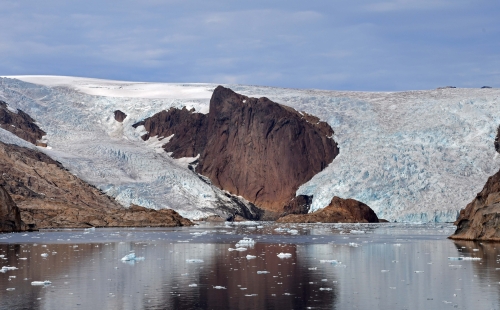
Header image credit: © Malte | Adobe Stock