An evidence-informed environment
The state of the environment has never been subject to such a high degree of scrutiny and observation as it is now.
As a result, we have more evidence than ever before, providing a crucial opportunity to ensure an evidence-informed approach to policy making, where scientific insights are used alongside social and democratic perspectives to produce policy which delivers thriving people, a healthy economy, and a flourishing environment.
Despite the size of that opportunity, barriers remain: policy makers do not always use the evidence to inform decisions, either because of the cultures surrounding decision making, or because they lack access, capacity, or resources. Policy makers and environmental professionals also share in a further challenge: sometimes environmental data is inaccessible as a source of evidence, even if that data already exists.
The reality of these challenges is that our society often forfeits the potential for better solutions and improved environmental outcomes. That has immediate consequences for people, the economy, and nature, all of which suffer when policy making is not informed by the evidence.
Key messages
This report provides an overview of how those challenges have manifested in practice, informed by the perspectives of IES members, analysis of the wider literature, and the reflections of an interdisciplinary expert working group. The IES recommends:
- Adopt cultures of evidence-informed policy making across government.
- Train policy makers in effective evidence-informed policy making.
- Provide the resources and capacity across government to deliver evidence-informed policy making in practice.
- Deliver comprehensive mapping of the environmental evidence landscape.
- Adopt a plan for consolidating evidence, including from environmental assessments for individual projects.
- Provide incentives to open up accessibility of privately-held evidence.
Further recommendations are set out in Our Shared Mission for Sustainable Wellbeing.


What next?
This report was just one part of our work to help represent the voice of science and scientists through policy:
- In 2025, we published a series of reports as part of our Knowledge Project, focused on the role of knowledge in supporting evidence-informed policy.
- Our Environmental Policy Implementation Community (EPIC) works with local authorities and environmental experts to deliver policy in practice. It has nearly 1000 members connected with a purpose: getting things done.
- We support members to develop their own policy skills, including through our training on ‘Understanding environmental policy’ and 'Influencing and Engaging with policy'.
- Through Essential Environment, we keep IES members up-to-date with the latest developments, implications of the most important policy changes, and briefings on the latest changes affecting water, air quality, and land and nature.
If you want to support the work of the IES, you can become an affiliate, or if you’re a professional in the environmental sector working with science, consider joining the IES.
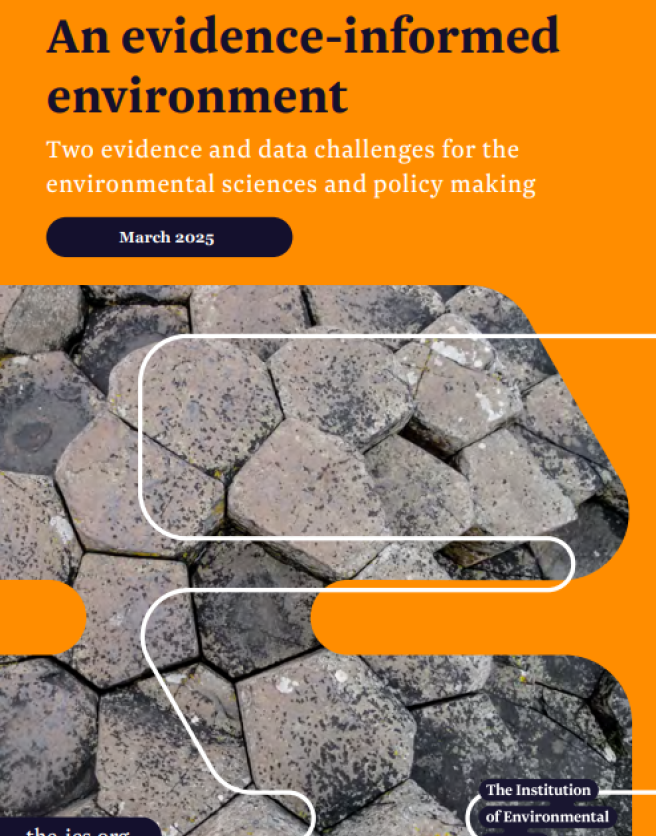
Header image credit: © Gustavo Muñoz | Adobe Stock