Hot takes from London Climate Action Week
Against the backdrop of England’s hottest June since records began, the IES’s Climate Action Community has been participating in London Climate Action Week (20th – 28th June 2026), attending events including the flagship Climate Innovation Forum, SLR’s No-Bull Conversations, and the Clean Air Fund’s Clean Air Hub.
Discussions during the week were far-reaching. They explored the implications of climate change for our energy, food, and water systems, and considered how solutions can be developed and delivered in the context of geopolitical uncertainty and profound societal and technological change.
The challenges and potential opportunities of AI were high on the agenda, alongside how to move from vague commitments to vigorous financial systems that prioritise climate, nature and the environment. Discussions explored how this could be achieved through disclosures, criteria, blended finance, and catalytic capital, and the role of both high level and granular data in supporting this.
Common themes cropping up in many of the events were:
- the importance of focusing on climate action implementation to tangibly deliver on goals;
- the need to accelerate and amplify action on, and funding for, adaptation and resilience in the face of current and predicted climate impacts;
- the fundamental role of nature and climate in supporting a healthy society and economy; and
- the need to develop solutions using systems approaches that properly recognise and account for the trade-offs, feedback loops, and synergies that exist across our environment, economy and society.
The Climate Innovation Forum signalled the diplomatic opening of London Climate Action Week, featuring presentations from key political figures, alongside practitioners working on the ground to deliver climate action. Minister Murat Kurum of Türkiye (COP 31 President-Designate), provided an overview of Turkiye’s action agenda for COP31, including a target for electricity to meet 35% of total energy demand by 2035. The event also featured dedicated stages for nature, the circular economy and finance. It ended with an impassioned speech by former US Vice President Al Gore, who described the clean energy transition as “unstoppable” but underlined the urgency of climate action over climate conversation, particularly in the face of current geopolitics. Gore emphasised that “political will is itself a renewable resource”.
You can catch up on the recorded presentations from the Climate Innovation Forum on their website.
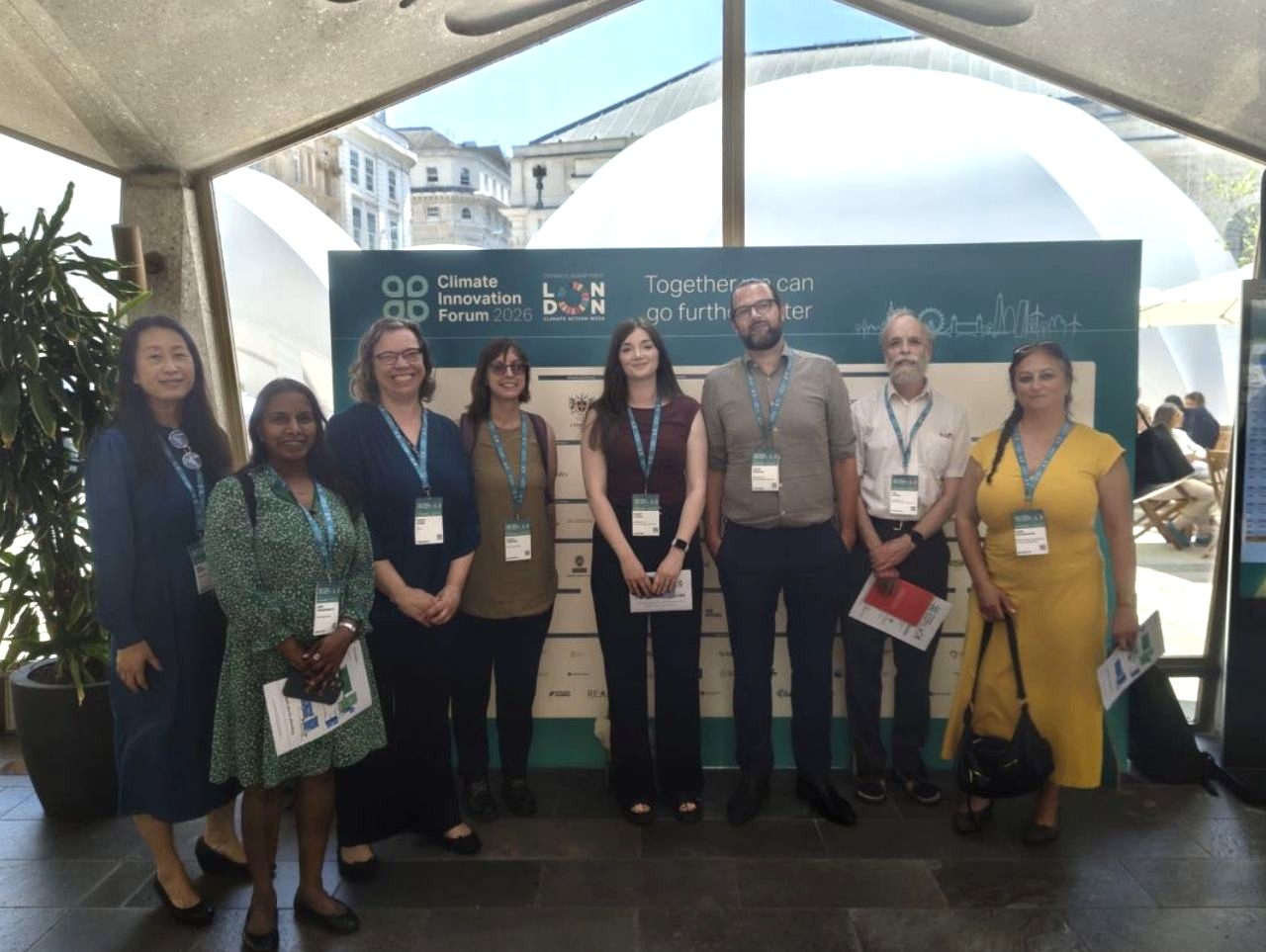
Climate Action Community members' key takeaways from the week:
Xiangyu Sheng, FIEnvSc, FIAQM, CEnv - Chair of the Climate Action Community Steering Group
As someone who has worked in the environmental sector for many years, I left London Climate Action Week encouraged by the energy, innovation and determination on display. However, the message was clear: the technologies and solutions exist; our challenge is to accelerate deployment, remove barriers and turn ambition into action.
A few reflections that particularly resonated with me were:
- Climate action is increasingly being framed as an opportunity, not just an obligation;
- The pace of innovation is accelerating;
- The implementation gap remains a challenge; and
- Nature and climate must be addressed together.
Sarah Legge, FIEnvSc, CEnv, MIAQM - Vice Chair of EPIC and Climate Action Community member
Having attended Monday’s Climate Innovation Forum, with inspiring speakers exploring topics from the planetary to the personal, including COP, finance, the intersection of climate, nature and the wider environment, innovation, implementation, and individual choice, I spent the Wednesday of London Climate Action Week, at the Clean Air Fund’s Clean Air Hub.
This event looked at public health and climate change, and the impacts of air pollutants, including super pollutants (which affect both). Martina Otto, Head of the Climate and Clean Air Secretariat, stressed that clean air programmes can be effective climate action in the short term. This was echoed by Andreas Bjelland Eriksen, Norwegian Minister for Climate and Environment, who quoted the IPPC conclusion that we need to tackle climate and pollution together, as super pollutants contribute to half of current warming. This links into our important work at EPIC on integrating action on air quality and climate change at the local level.
From the global to the local, Jane Burston, Clean Air Fund CEO, launched a report on the Clean Air Dividend of Net Zero that demonstrated the economic benefits from air quality and health improvements from to the UK's transition. There were also updates by the Breathe Cities team and local London action, and discussions around community action, with powerful artworks, storytelling, and inspiring public engagement projects.
The day made it clear that, regardless of the current legal targets (which I highlighted, on behalf of IES, at the recent EAC inquiry), air pollution still has a devastating impact on health, climate, equity and environmental justice, disadvantaged groups, and especially children. As the Deputy Mayor of London Mete Coban remarked, “Those who’ve done the least to cause the crisis are paying the highest price”.
I thought Vassil Terziev, the Mayor of Sofia, speaking at CAF’s Clean Air Hub summed the day (and London Climate Action Week) up best: “We know what we need to do, we just need the courage to do it.”
Kripa Dwarakanath, MIEnvSc, CEnv - Climate Action Community Steering Group member
To scale climate finance and hit our net-zero targets, we must move past abstract targets and lean heavily into granular data, rigorous frameworks, and systemic thinking. These are my top takeaways from LCAW discussions, in two key areas:
- Carbon reporting, circularity and critical minerals
- Reporting as intelligence: Sustainability reporting should never be a checkbox exercise. We must treat compliance reporting as a rich source of internal intelligence to actively guide corporate strategy.
- Data unlocks capital: Surface-level metrics don't cut it anymore. Granular data is a strategic asset. Better evidence enables true transparency, allowing investors to de-risk projects and confidently deploy capital.
- Rethinking Scope 3 and critical minerals: We need to aggressively utilise Scope 3 emissions data to drive strategic decisions, particularly around supply chains heavily reliant on critical minerals.
- The circular economy is decarbonisation : Circularity isn't just about waste management; it is a core decarbonisation measure. Integrating flexibility in energy demand management is a massive part of this interconnected puzzle.
- The new era of nature and biodiversity
- The conversation around Nature-Based Solutions (NbS) is maturing rapidly, shifting from vague "green" claims to rigorous financial structures.
- Corporate bias is shifting: Capital and partnerships are heavily favouring organisations that have already committed to science-based targets (SBTi) and the TNFD (Taskforce on Nature-related Financial Disclosures) framework.
- Moving forward, the focus has to be on reducing our raw withdrawals from nature and funding projects that treat environmental health as a systemic reality rather than a corporate afterthought.
Sarah Hodson, MIEnvSc, CEnv - Climate Action Community Steering Group member
During LCAW SLR hosted a day of "No-Bull Conversations" at Somerset House in partnership with teams from recent acquisitions SB+CO and WAP. Five focused panel discussions addressed the issues where businesses need the greatest clarity. From our food system to the AI infrastructure boom, this event brought together leaders from industry, research and civil society for honest, straightforward conversations. It was interesting that themes discussed reflected those covered the day before at the Climate innovation Forum.
Key takeaways include:
- Long-term systemic risk is not given the airtime needed, with over-confidence in short-term solutions.
- Instruments of change are needed that support responsible business in the food sector, as well as wider societal behaviour changes that are healthy, affordable, the easy choice, and attractive to implement.
- Use of social contracts for food systems could help businesses and wider sectors transition to a sustainable model and support fairer wealth distribution.
- Companies need to get smarter on how to engage with policy making, to ensure that corporates and governments are working to the same agenda. Appropriate and well-designed government interventions at the state level can help to support longer-term adaptive behaviours at the local level.
- Multisystem level initiatives can have a big impact. Market takers need to step up to use retail influence to enable social change rather than reacting to perceived consumer pressures.
- Consumers don’t always trust the sustainability claims of businesses, and businesses don’t trust that sustainability initiatives will support market returns. This leads to a ‘stalemate’ situation. Building trust across stakeholders is vital.
- Data centres are inevitable to support the responsible use of AI tools. These must be built sustainably, use less water, and use renewable energy. We need to fix the global grid energy system to create flexibility in energy supply to support new data infrastructure. The technology of the future must not be designed to use the technology of the past.
- The language of sustainability is very important to consider: this new report digs into how businesses frame sustainability, how the media filters it, and how non-specialists think and talk about it, before offering practical guidance on how to bridge the gap between all three.
- Fundamental to supporting action is moving to solutions-focused language and framing the transition as an opportunity rather than a cost, with a focus on outcomes and pragmatic examples.
- Governments need to do more to unlock potential for scale and reward low-carbon businesses
- A key challenge is moving from systemic over-consumption to the systemic changes needed to transition. Enabling meeting people's needs should be the priority, along with aligning profitability with sustainability.
Ian Byrne, CEnv - Council Member and Climate Action Community member
It was good to meet some of the other Community members for the first time in person, having only seen them on Zoom before. Indeed, that could apply more widely – LCAWk and the Forum that we all attended are good for the connections that can be made, old or new, as much as for the more formal sessions or speeches. But having said that, it was good also to hear Al Gore in a passionate defence of climate action, demolishing the fake denialism from the current US administration.
I also attended an ISO-sponsored side event in the Guildhall, which brought home the need for a global common approach to tackling climate change. Kripa and I have been actively working on the new ISO Net Zero standard for organizations (which will become ISO 14060), representing IES, and this has now entered its public enquiry stage. The Net Zero standard builds in an earlier International Working Agreement (IWA 42) on net zero, but also reflects a real effort to bring together some of the private sector initiatives, including the Greenhouse Gas Protocol and Science-Based Targets Initiative.
Later in the week, I attended one of the many roundtables discussing implementation – in this case how we can ensure that adaptation works in parallel with mitigation activities. One of the insights that came out was that many measures traditionally regarded as being good for energy efficiency, especially in the built environment – such as careful orientation, the use of overshading to avoid overheating, and high thermal mass – also work well for climate adaptation.
Next steps for the Climate Action Community
The Climate Action Community will be continuing conversations on how to effectively implement action for climate and nature through dedicated events, discussions and articles. Upcoming events will be exploring the role of nature-based solutions in mitigation, adaptation and resilience, and how action on climate can support public health and wellbeing.
Join the Community mailing list in the Members' Area of the website to stay up to date on our work and ways to get involved.