Burntwood Lecture 2026 - Professor Richard Betts; 'The World after 1.5°C'
On the 12th February, the IES held its 23rd Burntwood Lecture, bringing together over 100 environmental professionals to hear from an eminent speaker on an important contemporary environmental issue. This year we were delighted to host Prof. Richard Betts, Chair in Climate Impacts at the University of Exeter and Head of Climate Impacts Research at the Met Office Hadley Centre in Exeter, to talk about The World After 1.5°C.
UN Secretary General António Guterres has said, “The truth is that we have failed to avoid an overshooting above 1.5°C in the next few years.” This moment marks a profound shift in the climate challenge.
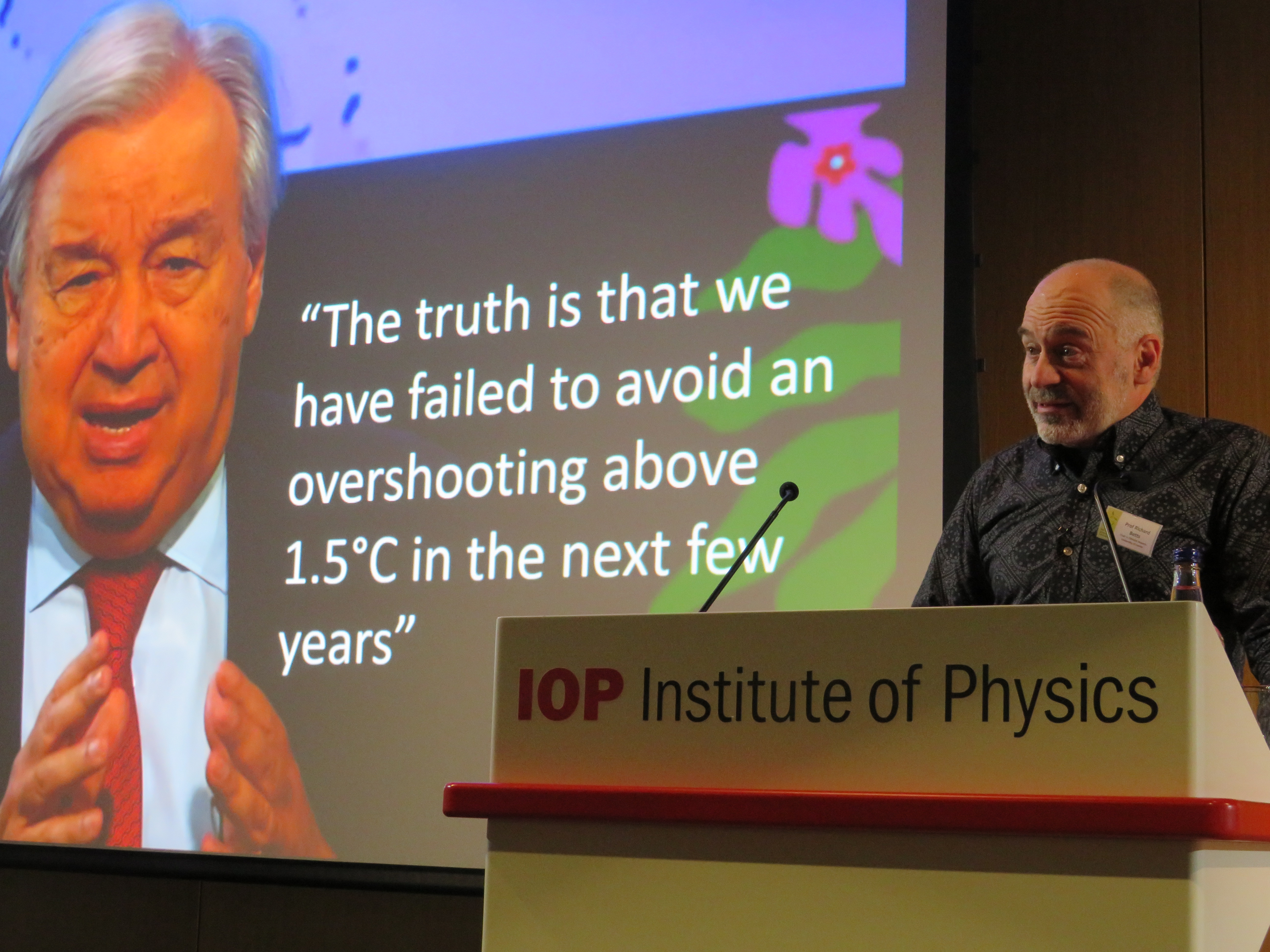
Richard's talk explored the implications of crossing this threshold, highlighting the impacts of climate change that are already being felt across the UK and around the world, from more frequent and intense extreme weather to accelerating sea level rise, as well as the actions that need to be taken to prevent continuing global temperature rise. Richard underlined that the urgency for climate action is now twofold: to adapt rapidly to the changes already unfolding, and to cut emissions at speed to reach net zero in order to limit how much worse the impacts become.
Throughout his talk, Richard set out the latest climate science on where we are now, how current warming is reshaping our environment, and what we can expect in the decades ahead. He distinguished between changes that are now unavoidable and those that remain within our power to prevent, grounding the discussion in the best available evidence and supporting a focus on effective climate action.
Richard's talk was followed by a lively discussion, chaired by Ayesha Tandon, Science Correspondent at Carbon Brief. This discussion included inputs from respondents, who reflected on the lecture and discussed the implications of climate change for their areas of expertise. The respondents were Vicki Hird, Strategic Lead for Agriculture at The Wildlife Trusts and previously Head of Sustainable Farming at the Sustain Alliance, Professor Ed Hill CBE, former Chief Executive of the National Oceanography Centre, and William Wilson, Interim Environmental Protection Assessor for Wales and formerly Principal Lawyer with the Office for Environmental Protection. The discussion was wide-ranging, touching on the importance of limiting global warming for resilient food systems, the impact of climate change on our marine and coastal environments, and the role of climate change in increasing poverty rates worldwide.
The discussion underlined the importance of delivering targeted and effective climate action at pace across all areas of society, highlighting that the solutions we need to prevent further warming are already available to us. Therefore, focus should be on dismantling the political and economic barriers to action, using an evidence-informed approach.
See photos from the evening on Flickr
Interested in climate action? Join our Climate Action Community
Our interdisciplinary Climate Action Community (CAC) champions transformative approaches to reshaping unsustainable systems. We recognise that climate change cannot be addressed in isolation but requires solutions that address the interlinked challenges of biodiversity loss and pollution.
The Community holds regular events, discussions, and biannual community meetings covering adaptation, mitigation and resilience. It also engages with key organisations and initiatives across the sector, including UNFCCC, ISO and the Professional Bodies Climate Action Network.
It is open to all IES members - if you are a member, you can join the Community via the Members Portal. If you are not a member, find out more about the benefits of IES membership and how to join.
Image credit: © Josef Cink - Adobe Stock