Environmental Principles Policy Statement: Consultation response
Following the UK's exit from the European Union, the Environment Act 2021 set out a new governance framework for England and parts of the UK.
One of the most important elements of that framework is the Environmental Principles Policy Statement (EPPS), which is intended to ensure that decisions across government reflect sound environmental decision making.
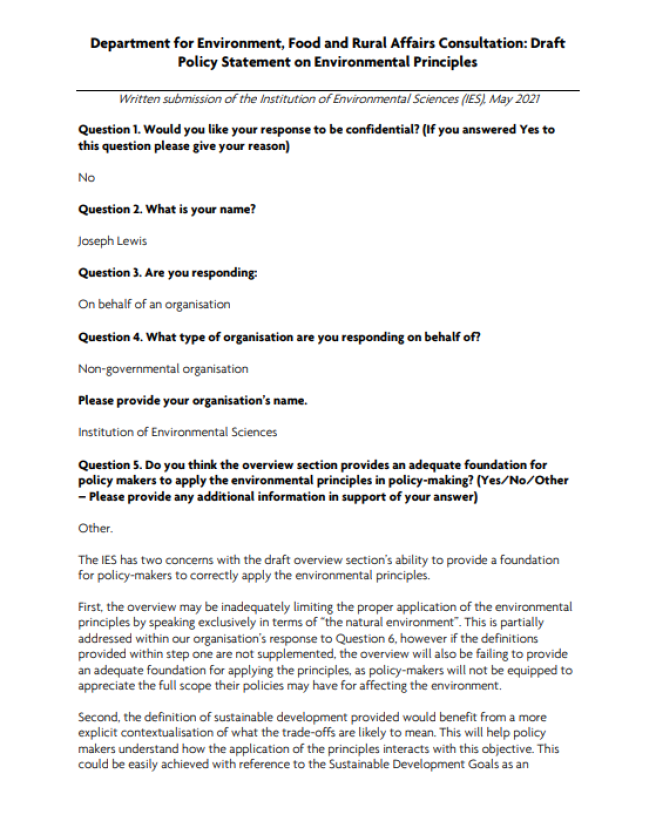
In 2021, the Government held a consultation on a draft version of the EPPS, to which the IES submitted this response.
What did we say?
- While we supported the intention of the EPPS, we believed that the draft version presented in the consultation was not sufficient to drive more joined-up decisions
- We raised concerns that the definitions used were too narrow, excluding a significant scope of implications for the environment and sustainable development
- We argued for a more systemic approach to the application of the principles, with a view to more coherent decision making across government
- We outlined a range of practical concerns, including how cumulative effects might not be properly recognised by the draft principles
- We scrutinised the draft process for applying the principles, which was subsequently amended based on feedback from many consultation respondees



What happens now?
The implementation of environmental governance remains a key priority for environmental action across the UK.
In 2026, the IES launched a crucial report on reconnecting environmental targets with credible outcomes, including the legally-binding targets set under the Environment Act.
IES President Julie Hill MBE called for "a Golden Thread of Governance" to see environmental aspirations through to action. In that report, we set out seven recommendations for delivering environmental targets in practice:
- Start with clear, simple targets underpinned by a unifying vision
- Produce actionable and specific delivery plans
- Convene government, partners, and practitioners for delivery
- Provide sufficient resources to ensure delivery
- Use strong accountability frameworks at the programme or project level
- Monitor with a purpose and make better use of data
- Ensure monitoring and evaluation result in feedback to refine plans and delivery
If you want to support the work of the IES, you can become an affiliate, or if you’re a professional in the environmental sector working with science, consider joining the IES.
Header image credit: © alan1951 via adobe Stock