Built Environment Profession Strategy: Environmental Policy Forum response
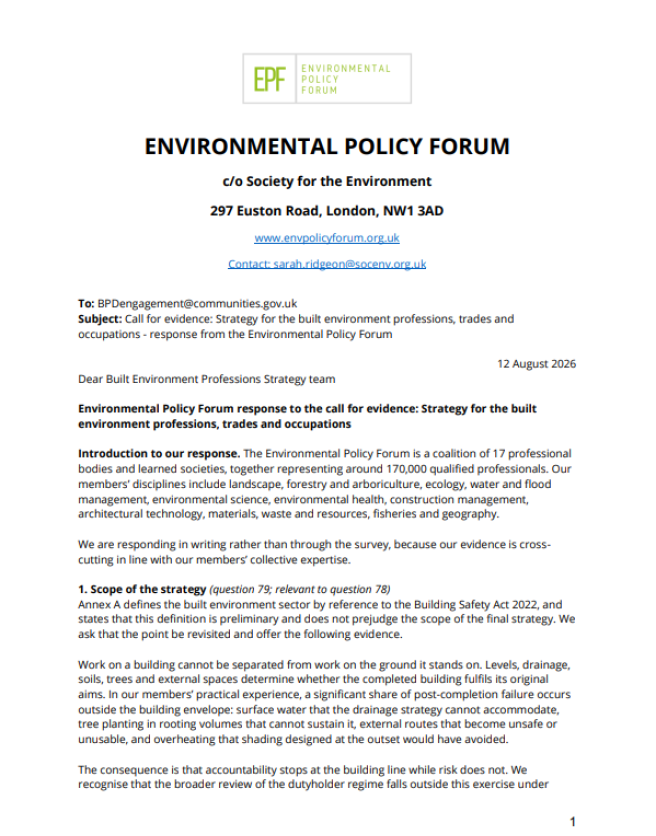
2026 marked a strategic turning point for the built environment in the UK. Following a significant overhaul of the National Planning Policy Framework in England and a renewed push to develop housing and infrastructure, the Government also announced a call for evidence on a strategy for the built environment professions, trades and occupations.
With many IES Members working in the built environment or engaging with linked processes, the Institution teamed up with colleagues in the Environmental Policy Forum (EPF), supporting this joint response to the call for evidence.
Our recommendations for the built environment professions
While the full response from the EPF goes into further detail, key points from the response included:
- We cannot separate a building from the land it stands on, so the scope of the draft strategy runs the risk of ending accountability at the building line, even though risk continues far beyond.
- There are a range of skills gaps across the sector, where further guidance and support would help to improve consistency, clarity, and outcomes.
- The strategy does not sufficiently reflect the interconnected nature of systems, leaving a real risk that concerns like biodiversity, water security, climate resilience, and sustainability are sidelined.
- Where existing frameworks like Chartership and Registration exist, the strategy should build upon them, rather than reinventing what already exists.
- Chartership and Registration are a useful tool to minimise risk, yet accountability still needs to exist, particularly on the public procurement side.
- Evaluation criteria unduly prioritise financial costs, so a more balanced scorecard approach to procurement would help to better recognise impacts across a project's whole lifecycle.
- There are still many frictions in the built environment, particularly across the planning system, so the strategy should take the opportunity to smooth out and align the system.
Built environment policy: Find out more


Find out more
The Environmental Policy Forum is a coalition of professional bodies, including the IES, promoting environmental sustainability and resilience for the public benefit. It supports better policy decisions through joint letters and policy positions.
You can also find out more about policy for the built environment with more IES resources:
- Learn more about the latest policy developments with Essential Environment, including articles on why we are failing to adapt, and our horizon scanning briefing on land and nature policy.
- To take part in thought-provoking, critical conversations around EIA from a science-based perspective, join the EIA Community.
- Take a step towards developing your own policy skills through our training on ‘Understanding environmental policy’ and 'Influencing and Engaging with policy'.
- Support effective delivery of policy by joining our Environmental Policy Implementation Community.
If you want to support the work of the IES, you can become an affiliate, or if you’re a professional in the environmental sector working with science, consider joining the IES.
Header image credit: © StellaSalander | Adobe Stock