
Home
Home
  • Login or Register
Login or Register
Login or Register
  • About us
    • About the IES

    • The IES Family

    • Governance

    • Our team

    • Contact us


  • Membership
    • Membership options

    • Chartership and Registers

    • Application guidance


  • Analysis, Guidance & Policy
    • Our Resources

    • environmental SCIENTIST

    • Analysis

    • Policy

    • Guidance


  • Events, Training & CPD
    • Events

    • Continuous Professional Development

    • Short courses


  • Jobs & Opportunities
    • Jobs & Opportunities


  • Communities
    • Communities

    • Climate Action

    • Community for Environmental Disciplines in Higher Education (CEDHE)

    • Environmental Impact Assessment (EIA) Community

    • Environmental Policy Implementation Community (EPIC)

    • Foundation for Water Research (FWR)

    • Institute of Air Quality Management (IAQM)

    • Land Condition Community

    • Marine & Coastal Science Community

    • National Contaminated Land Officers Group (NCLOG)


  • About us
    • About the IES

    • The IES Family

    • Governance

    • Our team

    • Contact us


  • Membership
    • Membership options

    • Chartership and Registers

    • Application guidance


  • Analysis, Guidance & Policy
    • Our Resources

    • environmental SCIENTIST

    • Analysis

    • Policy

    • Guidance


  • Events, Training & CPD
    • Events

    • Continuous Professional Development

    • Short courses


  • Jobs & Opportunities
    • Jobs & Opportunities


  • Communities
    • Communities

    • Climate Action

    • Community for Environmental Disciplines in Higher Education (CEDHE)

    • Environmental Impact Assessment (EIA) Community

    • Environmental Policy Implementation Community (EPIC)

    • Foundation for Water Research (FWR)

    • Institute of Air Quality Management (IAQM)

    • Land Condition Community

    • Marine & Coastal Science Community

    • National Contaminated Land Officers Group (NCLOG)


Policy

Influencing evidence-informed, transformative change

Encouraging evidence based change

Today, there is an environmental dimension to every debate – and our thousands of members are embedded in every scientific field at the heart of global, evidence-based solutions. 

Our strong ties with academia, government and the professions mean we’re in a unique position to influence evidence-based, transformative change. 

Recent policy responses
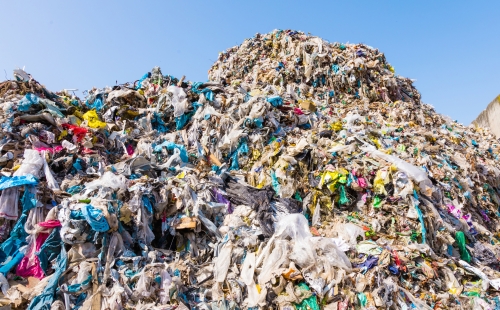
Mountain of colourful plastic waste
Policy response
Tue, 31 March 2026

Northern Ireland Resources and Waste Management Strategy

A row of Victorian terraced houses
Policy response
Tue, 10 March 2026

National Planning Policy Framework: 2026 revisions

Colourful hot air balloon in the sky
Policy response
Fri, 6 March 2026

IES & IAQM Response: Environmental Audit Committee Air Pollution Inquiry

Format: 16/09/2026
Format: 16/09/2026
View All

Policy Reports

Pair of beautiful butterflies resting on a bright flower
Sector Report
Thu, 20 November 2025

Our shared Mission for Sustainable Wellbeing

Aerial view of a river in the Amazon surrounded by heavy forest
Sector Report
Wed, 29 October 2025

Delivering change in a complex world

Person examining receipts in a supermarket
Sector Report
Thu, 15 May 2025

Cost-benefit analysis for environmental policy

Expert geologists surveying an area while wearing hard hats and high-vis vests
Sector Report
Wed, 14 May 2025

Evidence-informed policy making

Two birds on a branch chattering to each other
Sector Report
Wed, 14 May 2025

Policy analysis and awareness

Luminescent jellyfish dancing in dark waters
Sector Report
Fri, 14 March 2025

Knowledge in a world of transformative change

Aerial view pattern of hexagonal basalt columns
Sector Report
Fri, 14 March 2025

An evidence-informed environment

Kidbrooke Village - Berkeley Group's construction in progress
Sector Report
Fri, 7 February 2025

BNG in Practice: One year on from mandatory implementation

Format: 16/09/2026
Format: 16/09/2026
View All

Policy Analysis

Urban garden with plants growing in colourful drainpipe
Analysis
Mon, 17 August 2026

Connected environmental policy: Are things together or are they apart?

Complex pattern of green and brown brain coral
Analysis
Tue, 11 August 2026

Handling complexity in environmental policy

Person examining receipts and thinking about value
Analysis
Thu, 6 August 2026

Values beyond value: A more nuanced take on nature

Sunset over Romney Marsh, Kent
Analysis
Wed, 22 July 2026

What will a Burnham premiership mean for water?

Format: 16/09/2026
Format: 16/09/2026
View All

FAQs

How does the IES influence policy?

The IES maintains strong relationships with policy makers, including parliamentarians and government departments. To support our engagement, we produce policy reports, briefings, and guidance. Once our thought leadership has helped to influence policy agendas, we continue to engage with policy consultations and support delivery through our Environmental Policy Implementation Community.

Our policy influence is backed by robust horizon scanning on emerging science and policy developments, as well as our work to build connections across the sector, working with our members and other organisations as part of networks such as the Science Council and the Society for the Environment to represent the voice of the sector. The IES also provides expert perspectives in the media, and we are a UNFCCC and UNCBD admitted observer NGO.

Read our summary of IES policy activities for more information.

How does the IES determine its policy positions?

The IES brings a strong scientific and evidence-based perspective to addressing environmental challenges, but we focus on more than just the technical aspects of policy.

We take an integrated and solutions-led approach to policy change: from influence to implementation. Our approach is informed by systems thinking, with the goal of achieving transformative change towards a sustainable society. IES members are at the heart of how our policy programme is designed and delivered. They inform our horizon scanning, contribute to our thought-leading policy positions and reports, and actively engage as agents of change with the support of our policy training and briefings.

Our activities for the year are determined by the IES External Policy Advisory Committee, which includes members from different fields, IES trustees and Vice Presidents, and external stakeholders. The committee also feeds into our work, ensuring perspectives from different disciplines and connecting our work to the wider environmental science community.

How do we support our members to engage with policy?

A core pillar of our policy work is giving IES members the skills they need to support the transition to a more sustainable society and to be advocates for their own expertise.

We achieve this by informing members of policy developments so that they know where their expertise and interests interact with policy, and by providing resources and training to develop their skills as change agents and policy experts, so that they know how and when to engage effectively.

Our policy training is provided on a regular basis, both as an ‘on demand’ service and through periodic group workshops. It incorporates practical advice, case studies, and academic theories to support the development of the skills needed to engage effectively.

As a member, how can I get involved in policy responses?

If you have any suggestions for our policy work or any questions about policy developments, please contact Joseph Lewis, Head of Policy (joseph@the-ies.org).

When we respond to consultations, we always put together an interdisciplinary group of members and stakeholders to share their views. Regardless of your experience with policy, we always want to hear from members who have a perspective on ongoing consultations. You can keep up to date with consultations and other policy developments with our policy bulletin, Essential Environment, which is automatically sent to all IES members.

The easiest way to get involved in responding to policy is to join one of the IES Communities, which we consult whenever we are dealing with relevant topics. In particular, our Environmental Policy Implementation Community brings together members from across the environmental sciences to share their experiences and call for ambitious and deliverable policy.


Our Partners

The IES Policy Team works with other organisations to further our mission and is affiliated with several international groups and networks:

  • UNFCCC: We are an accredited observer NGO to the UN Framework Convention on Climate Change and send delegates to annual COPs.
  • UNCBD: We have been granted observer status with the UN Convention on Biological Diversity and send delegates to its summits.
  • IPBES: The IES has been approved as an accredited observer for the 12th plenary session of IPBES.
  • ISO: The IES is a liaison to ISO/TC 207/SC 7 and sends members as representatives to relevant ISO working groups.

Contact our policy team

Joseph Lewis
Joseph Lewis
Head of Policy
Joseph Lewis

Joseph Lewis

Head of Policy
Joseph is responsible for delivering policy for the IES and working to promote the use of the environmental sciences in decision making. He has an MSc in Public Policy from the University of Bristol, where he specialised in environmental policy, as well as a Law Degree from Durham University. Joseph was recognised on the ENDS Power List 2026 for his work in ensuring that policy reflects the voices of science, scientists, and the natural world.
Ellie Savage
Ellie Savage
Policy Lead
Ellie Savage

Ellie Savage

Policy Lead
Ellie joined the IES in 2023 and is responsible for supporting the work of the IES’s Environmental Policy Implementation Community (EPIC). Before joining the IES, Ellie led on local government policy and research at a climate change and democratic engagement charity. She has a BA in Politics and Economics from the University of Sheffield.

Advisory Committee

Gary Kass
Gary Kass
External Advisory Policy Committee Chair
Gary Kass

Gary Kass

External Advisory Policy Committee Chair
Gary has 40 years’ experience as an environmental and sustainability practitioner, researcher and knowledge broker. He is a member of the Office for Environmental Protection College of Experts, Visiting Professor in Sustainability Science, Policy & Practice in the Centre for Environmental Policy at Imperial College and Honorary Professor in Geography at the University of Nottingham. Previous roles include Deputy Chief Scientist at Natural England and Head of Public Engagement at POST.
Ana Mijic
Ana Mijic
Committee Member
Ana Mijic

Ana Mijic

Committee Member
Ana is Professor of Water Systems Integration at Imperial College London. Her research develops systems approaches and integrated modelling tools that connect hydrology, infrastructure and policy to support resilient water management. She leads international research on human–water systems and water planning, working closely with government, industry and regional authorities to translate evidence into practice. Ana is a member of the IES Policy Committee and FWR community.
Andrew Oroke
Andrew Oroke
External Advisory Committee Member
Andrew Oroke

Andrew Oroke

External Advisory Committee Member
Andy is a Wastewater Specialist with Wessex Water, helping to drive innovative wastewater treatment strategy, policy and environmental performance. He holds a PhD in Environmental Engineering with research on the development of engineered, nature-based, low-cost and low-carbon wastewater treatment technology for the removal of metal pollutants. He has worked extensively in environmental assessment, is a guest speaker on environmental issues and a technical reviewer of UNEP’s GEO-7 policy report.
Craig Love
Craig Love
External Policy Advisory Committee Member
Craig Love

Craig Love

External Policy Advisory Committee Member
Craig is Director of Impact Assessment & Reporting at the Scottish National Investment Bank, leading work on impact assessment, sustainability reporting, and climate risk. He is a Board Member of the Energy Managers Association and a Member of the Office for Environmental Protection’s College of Experts. Previously, he led award-winning environmental and decarbonisation programmes at Transport Scotland. Craig is a Chartered Scientist, Chartered Environmentalist and an IES Fellow.
Denise Okpala
Denise Okpala
External Policy Advisory Committee Member
Denise Okpala

Denise Okpala

External Policy Advisory Committee Member
Denise is a Chartered Scientist and Chartered Marine Scientist who has worked with the Economic Community of West African States for >13 years, including the West African Biodiversity & Climate Change Project and the Agro-Hydro- Meteorological (AGHRYMET) Committee. Previously, she worked in the Oil and Gas Division of the Federal Ministry of Environment and the National Institution for Oceanographic & Marine Research in Nigeria. She is an Expert Reviewer of the IPCC and sits on the IES Council.
Jemma-Anne Lonsdale
Jemma-Anne Lonsdale
External Policy Advisory Committee Member
Jemma-Anne Lonsdale

Jemma-Anne Lonsdale

External Policy Advisory Committee Member
Jemma-Anne is a Principal Consultant at Haskoning specialising in marine and coastal environmental impact assessment, consenting and sustainable development. She has extensive experience supporting offshore and coastal infrastructure projects, providing strategic advice on Environmental Impact Assessment (EIA), Habitats Regulations Assessment (HRA), stakeholder engagement and marine licensing.
Keith Cotton
Keith Cotton
External Policy Advisory Committee Member
Keith Cotton

Keith Cotton

External Policy Advisory Committee Member
Keith is Managing Director & Principal Consultant at CrispAir, a sustainability-driven creative problem-solving & communications consultancy. Leading projects include the award-winning CityAir program for the City of London and the SubstationWatch program for EDF Energy. Keith is the Lead Councillor for Sustainability and Climate at St Albans City and District Council, as well as having served as a Trustee of Herts & Middlesex Wildlife Trust and a Non-Executive Director of a Housing Association.
Noel Nelson
Noel Nelson
External Policy Advisory Committee Member
Noel Nelson

Noel Nelson

External Policy Advisory Committee Member
Noel Nelson was an air quality scientist at the Met Office and was one of the founding members of the IAQM. He worked at the Met Office for over 30 years, with a wide range of experience encompassing air quality modelling, weather and health relationships and some climate change impacts.
Paul Aujla
Paul Aujla
External Policy Advisory Committee Member
Paul Aujla

Paul Aujla

External Policy Advisory Committee Member
Paul is an Environmental Manager with >15 years’ experience in environmental management. He has worked in the private and public sectors across sites in England, Scotland and Wales. His roles have focused on improving site standards, legal compliance, stakeholder engagement, environmental management systems and permitting. These positions have covered a range of sectors including construction, energy, Ministry of Defence, nuclear and waste. Paul is an IES Full Member.
Ruth Calderwood
External Policy Advisory Committee Member

Ruth Calderwood

External Policy Advisory Committee Member
External Policy Advisory Committee member
Tim Williamson
Tim Williamson
External Policy Advisory Committee Member
Tim Williamson

Tim Williamson

External Policy Advisory Committee Member
Tim is a Technical Director at Logika Group, with more than 30 years’ experience in environmental policy support, development and analysis. For 11 years, he led multidisciplinary evidence teams in Defra, covering first air quality and later waste and resource efficiency. Since 2016, Tim has worked in consultancy and joined Logika Group in 2020. He has led numerous policy support projects for Defra, the European Commission and other clients.
Tom Raven
Tom Raven
External Policy Advisory Committee Member
Tom Raven

Tom Raven

External Policy Advisory Committee Member
Tom is an environmental scientist and policy specialist with expertise in biodiversity, climate change, natural capital, and nature-based solutions. He has led complex research and policy programmes across government, academia and the private sector, translating scientific evidence into practical decision making and supporting on-the-ground environmental projects. He recently led the UK's negotiation of the IPBES Business & Biodiversity Assessment at IPBES-12.
Footer logo

The Institution of Environmental Sciences (IES) is a charitable organisation; a global professional membership body for environmental scientists.

Registered Charity #277611 | A company limited by guarantee | Registered in England #01053508

Contact Us

Institution of Environmental Sciences
Floor 3
130-132 Tooley Street
London, SE1 2TU
United Kingdom
info@the-ies.org
+44 (0)20 3862 7484

Explore
  • About us
  • Contact us
  • Membership Options
  • Chartered Environmentalist
  • Chartered Scientist
  • Analysis, Guidance & Policy
  • Data Policies

Copyright IES © 2026

×